Ingredients 5 and 10 of 11
Lutein and Zeaxanthin in Truewell: Eye Pigments in a Nerve Formula
Truewell lists lutein (5%) fifth and zeaxanthin (5%) tenth in its 600 mg blend. Both are 5% extracts, so by label math the capsules hold at most about 6 mg of lutein and 3 mg of zeaxanthin; the real amounts are unknown. The AREDS2 eye formula uses 10 mg and 2 mg (NEI, AREDS2). The research covers eye disease, not nerves or memory.
Written by the Truewell editorial teamUpdated
The basics
What are lutein and zeaxanthin?
They are yellow plant pigments called carotenoids. Both collect in the macula, the small central part of the retina that handles sharp, straight-ahead vision.
Truewell lists "Lutein (5%)" fifth and "Zeaxanthin (5%)" tenth in its blend. The label does not say where the pigments come from. Lutein supplements are commonly made from marigold flowers.
| Label name | Lutein (5%) |
|---|---|
| Scientific name | Carotenoid |
| What it is | Eye pigment |
| Position in the list | 5 of 11 (blend ingredients are listed from most to least by weight) |
| Per serving (2 capsules) | Not disclosed (part of the 600 mg blend) |
| Amount used in research | AREDS2 used 10 mg lutein for eye disease |
| Strength of evidence | Eye studies only |
| Traditional or marketed use | Eye pigment in the AREDS2 eye formula |
| Main caution | Our source makes no nerve or memory claim. |
Label math
What does "5%" mean for lutein and zeaxanthin?
Each line is an extract powder in which 5% is the pigment itself. The other 95% is plant material or carrier.
Blend ingredients are listed from most to least by weight (FDA, Labeling guide). So the fifth item can weigh at most 600 divided by 5, and the tenth at most 600 divided by 10. Five percent of those ceilings gives the most pigment the capsules could hold.
| Pigment | Place in blend | Extract, at most | Pigment, at most | AREDS2 daily dose |
|---|---|---|---|---|
| Lutein | 5 of 11 | 120 mg | About 6 mg | 10 mg |
| Zeaxanthin | 10 of 11 | 60 mg | About 3 mg | 2 mg |
These numbers assume each line weighs as much as it possibly could. The real amounts are unknown and could be much lower. Syvor has not published them.
Eye research
What does the AREDS2 research show about lutein and zeaxanthin?
The AREDS2 eye formula uses 10 mg of lutein and 2 mg of zeaxanthin a day. It can slow vision loss in people with intermediate age-related macular degeneration, or AMD (NEI, AREDS2).
Three points matter when you read that result next to a Truewell label:
- The research is about people who already have intermediate AMD, under an eye doctor's care.
- The AREDS2 formula also contains vitamins C and E, zinc and copper. Lutein alone is not the formula.
- Truewell's lutein is at most about 6 mg by label math, below the 10 mg in the formula, and its real amount is unknown.
Nerve claim
Do lutein and zeaxanthin support nerves or memory?
Our source makes no nerve or memory claim for them (NEI, AREDS2). They are eye pigments, studied for eye disease.
Truewell is labeled "Nerve Support*". These two lines do not add evidence for that label.
Three eye ingredients
Why does Truewell have three eye ingredients?
Lutein, zeaxanthin and bilberry leaf are all linked to eyes, not nerves. Syvor does not say why a nerve formula needs them.
Lutein (5%)
Studied in the AREDS2 eye formula at 10 mg a day. Truewell's amount is not printed.
Zeaxanthin (5%)
Paired with lutein in AREDS2 at 2 mg a day. Second to last in the Truewell blend.
Bilberry leaf powder
The leaf, not the berry. NCCIH says bilberry is not clearly helpful for any condition, and the leaves may be unsafe at high doses or with long-term use (NCCIH, Bilberry).
Bilberry fruit extract has a better safety record: up to 160 mg a day for 6 months was well tolerated (NCCIH, Bilberry). Truewell uses the leaf, and the label does not say how much. More on bilberry leaf in the overview. Filter the list below to "Eye pigments" to see all three in label order.
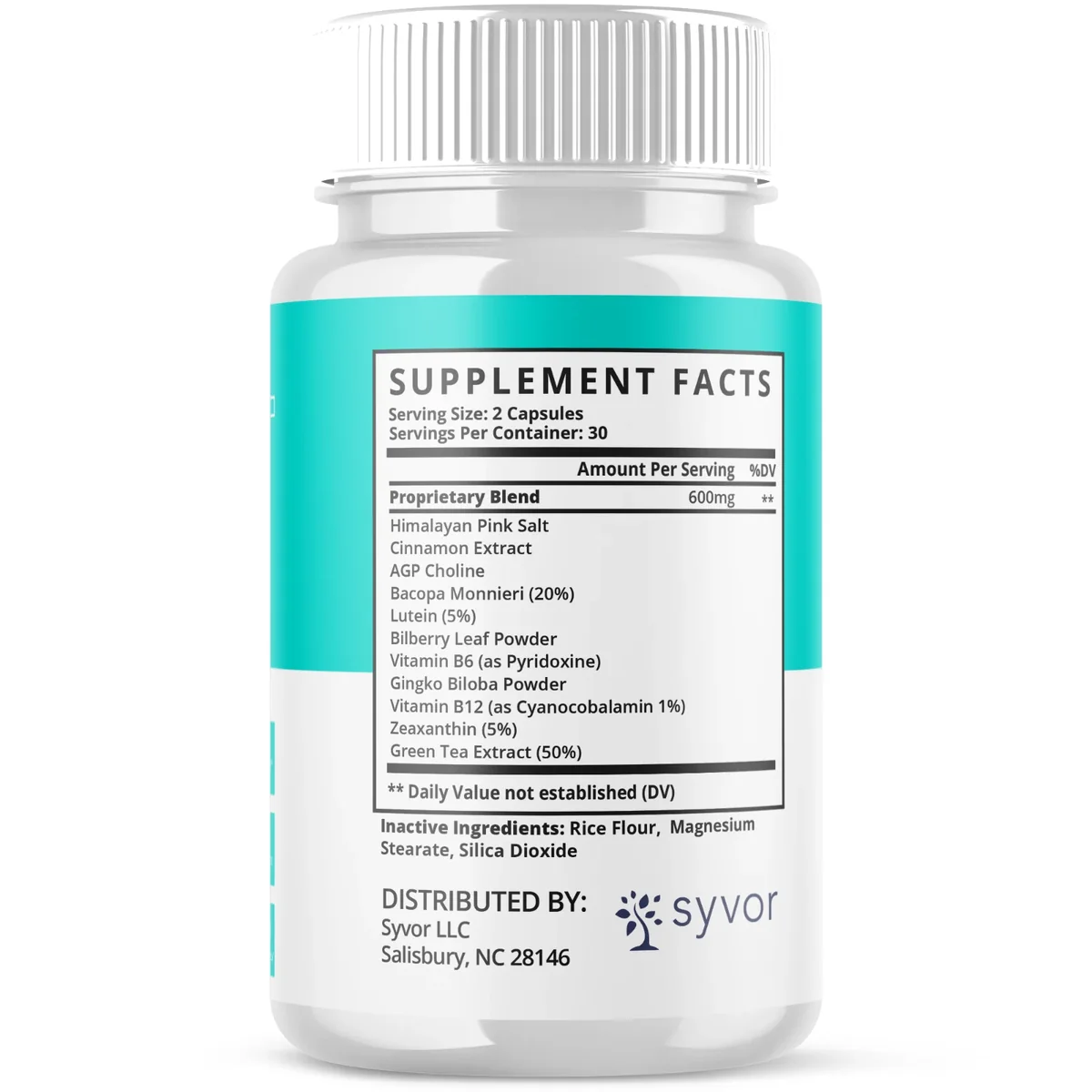
- 1Himalayan pink saltHimalayan Pink Salt · Not disclosed (part of the 600 mg blend)
- 2Cinnamon extractCinnamon Extract · Not disclosed (part of the 600 mg blend)
- 3Alpha-GPCAGP Choline · Not disclosed (part of the 600 mg blend)
- 4Bacopa monnieriBacopa Monnieri (20%) · Not disclosed (part of the 600 mg blend)
- 5LuteinLutein (5%) · Not disclosed (part of the 600 mg blend)
- 6Bilberry leafBilberry Leaf Powder · Not disclosed (part of the 600 mg blend)
- 7Vitamin B6Vitamin B6 (as Pyridoxine) · Not disclosed (part of the 600 mg blend)
- 8Ginkgo bilobaGingko Biloba Powder · Not disclosed (part of the 600 mg blend)
- 9Vitamin B12Vitamin B12 (as Cyanocobalamin 1%) · Not disclosed (part of the 600 mg blend)
- 10ZeaxanthinZeaxanthin (5%) · Not disclosed (part of the 600 mg blend)
- 11Green tea extractGreen Tea Extract (50%) · Not disclosed (part of the 600 mg blend)
Eleven ingredients share one 600 mg blend per 2-capsule serving, listed from most to least by weight. Salt comes first.
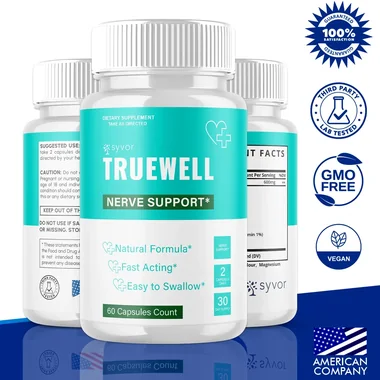
Ready to try Truewell?5 bottles $59.95 on the live listing · about $0.40 a day · free 2-4 day shipping
Order nowFor your eyes
Is Truewell a good source of lutein for your eyes?
No. Truewell's lutein is at most about 6 mg by label math, below the 10 mg AREDS2 dose, and its real amount is unknown.
If an eye doctor has told you to take an AREDS2-style formula, use a product that prints each amount. Show your eye doctor the Truewell bottle too, so the pigments are not counted twice.
- Look for printed milligrams for lutein and zeaxanthin.
- Match the doses your eye doctor named.
- Bring every supplement bottle to your eye exam.
The full label, line by line, is on the Supplement Facts page.
Food sources
Which foods have lutein and zeaxanthin?
Dark leafy greens are the richest everyday source. Both pigments also come from other colorful foods.
- Kale, spinach and collard greens.
- Broccoli, peas and summer squash.
- Corn and orange peppers.
- Egg yolks.
A plate of greens a few times a week is an easy habit, and it brings fiber and other nutrients with it.
Keep exploring
Which Truewell ingredients have more brain research?
If memory is your interest, bacopa monnieri has the most trials among the blend's herbs. Compare every ingredient on the ingredients overview.
FAQ
Lutein and zeaxanthin in Truewell: questions people ask
Why is lutein in a nerve supplement?
Syvor does not say. Lutein is an eye pigment, and our source studies it for eye disease, not nerves or memory (NEI, AREDS2). Truewell pairs it with zeaxanthin and bilberry leaf, three eye ingredients in a product labeled for nerve support.
How much lutein is in Truewell?
The label does not print it. Lutein is a 5% extract in fifth place in a 600 mg blend, so by label math the capsules hold at most about 6 mg of lutein. The real amount is unknown and could be much lower.
How much lutein and zeaxanthin should I take a day?
There is no official daily requirement. The AREDS2 eye formula uses 10 mg of lutein and 2 mg of zeaxanthin for people with intermediate AMD (NEI, AREDS2). If you have an eye condition, follow the dose your eye doctor recommends.
Can I take Truewell with an AREDS2 eye vitamin?
Ask your eye doctor or pharmacist. Truewell adds some lutein and zeaxanthin, but the amounts are unknown, and it also adds B6, ginkgo and green tea extract. Bring both bottles so someone can check the whole picture.
Do lutein and zeaxanthin have side effects?
Our eye-health source does not list side effects for the AREDS2 doses (NEI, AREDS2). In Truewell, the bigger safety questions come from other ingredients, such as the hidden vitamin B6 amount and the bilberry leaf powder.
What is the difference between lutein and zeaxanthin?
They are closely related yellow carotenoids that both gather in the macula. The AREDS2 formula pairs them, using five times more lutein than zeaxanthin (NEI, AREDS2). Truewell lists lutein much higher in its blend than zeaxanthin.
Is bilberry leaf the same as bilberry fruit?
No. Most bilberry research uses the fruit, and fruit extract up to 160 mg a day for 6 months was well tolerated. NCCIH says the leaves may be unsafe at high doses or with long-term use (NCCIH, Bilberry). Truewell uses the leaf.
Who wrote this
Written and reviewed by
Plain-language pages built from the label, the sales page and linked public health sources.
Last updated . Read our editorial standards and how we check reviews. This website is run by a U.S. retailer that sells Truewell, not by the manufacturer (the label says distributed by Syvor LLC, Salisbury, NC). We earn money when you buy through our order links.
Keep reading
More about Truewell
Ingredients
All 11 Truewell ingredients in label order, with label-math ceilings, the hidden B6 and what research used.
Read moreSupplement Facts
The Truewell label read line by line: the 600 mg blend, the label math, the oddities and what is missing.
Read moreBacopa monnieri
Bacopa in Truewell: the 20% extract, small memory effects, and why label math caps it at half the studied dose.
Read moreUSA Authorized Truewell Retailer
Ready to try Truewell?
The live listing sells a 5-bottle pack: about 5 months at 2 capsules a day, with free 2-4 day shipping and 30-day returns.
- Secure checkout
- 30-day window
- Ships from the U.S. with tracking